

Last Thursday, on a beautiful sunny afternoon in San Francisco at Okta HQ for the Vercel AI Accelerator Demo Day, I presented CodeYam and shared a live(!) demo of our new Editor product, introducing the idea of software simulation to a roomful of founders, investors, and operators.
Update: You can read Vercel’s recap here, or keep reading for my version.
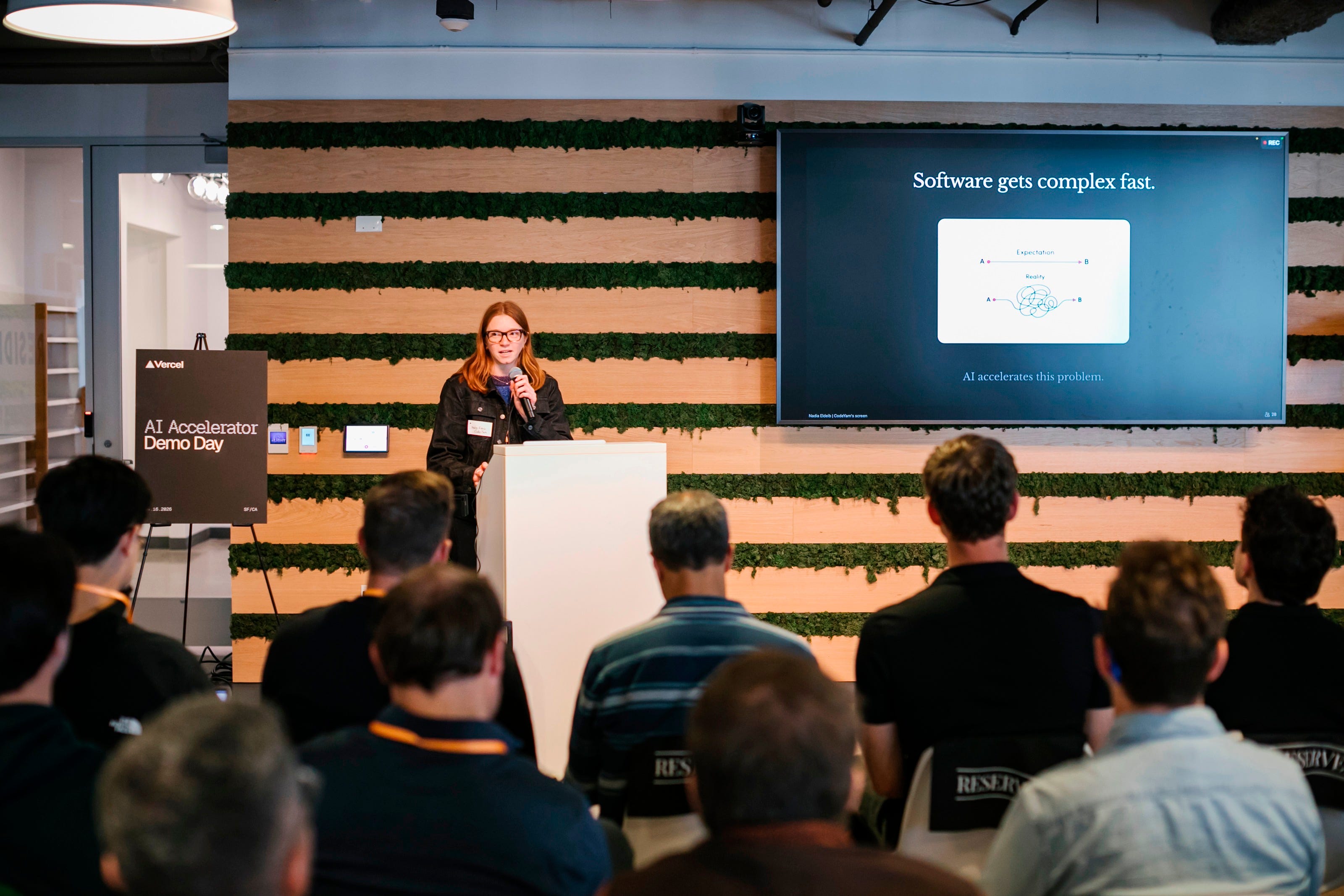
Vercel AI Accelerator 2026 Demo Day Highlights
28 of the 39 teams from our Vercel AI Accelerator cohort - first introduced here - presented to a panel of judges including Guillermo Rauch (Vercel CEO), Paul Klein IV (Browserbase Founder), and other VCs as well as leaders at companies like OpenAI and Anthropic.
Ultimately, the following teams won the top prizes:
In addition to these winners, some of my personal favorite pitches included:
Takeoff (beautifully designed smart trip planning)
Pai (AI digital twins for user and market research)
Milq (Lovable for Swift iOS apps)
Coreviz (AI studio and media workspace)
That said, all of the founders and teams were amazing. I left feeling inspired by the ideas, demos, and metrics folks shared.
My Experience Sharing CodeYam Editor
For CodeYam, this was our first live demo of our new core product: the CodeYam Editor, which allows you to harness the raw speed and power of AI models (Claude Code, in the demo) while getting more reliable and higher-quality results to build applications.
Our goal was simple: we wanted to reintroduce a new category in an approachable and exciting way, defining the problem and why we’ve created software simulation as a means of improving AI-native software development, for technical and non-technical builders alike.
If you want to watch my presentation, I recorded a version here.
With a hard 3 minute 30 second cutoff, it felt ambitious to combine a live demo of not one but two apps I built with CodeYam, along with enough upfront context to ensure folks understood just how unique what they were seeing is compared to current tools.
While I certainly left feeling like I could improve (always) and with great learnings, I also got a couple of folks who shared how excited they were about what we were building and, better still, asking how to get early access to try out CodeYam Editor.
This was a good reminder to practice building in public and sharing more about our vision for software development with AI and with CodeYam. This is something I aspire to continue doing more regularly.


Thank you so much to the Vercel team, especially Caroline Ciaramitaro, Madison McIlwain, and Alli Pope. I’m particularly grateful to them and to all the amazing Vercel team members and partners who made the program full of rich insights and useful perks. Thanks also to Eliot Durbin and Charlotte C. at boldstart ventures for the support and feedback.
Now, back to building CodeYam!
Go Nadia!
Huge respect for doing a live demo in 3.5 minutes 😅 Excited to see where you take CodeYam next! Rooting for you :)